
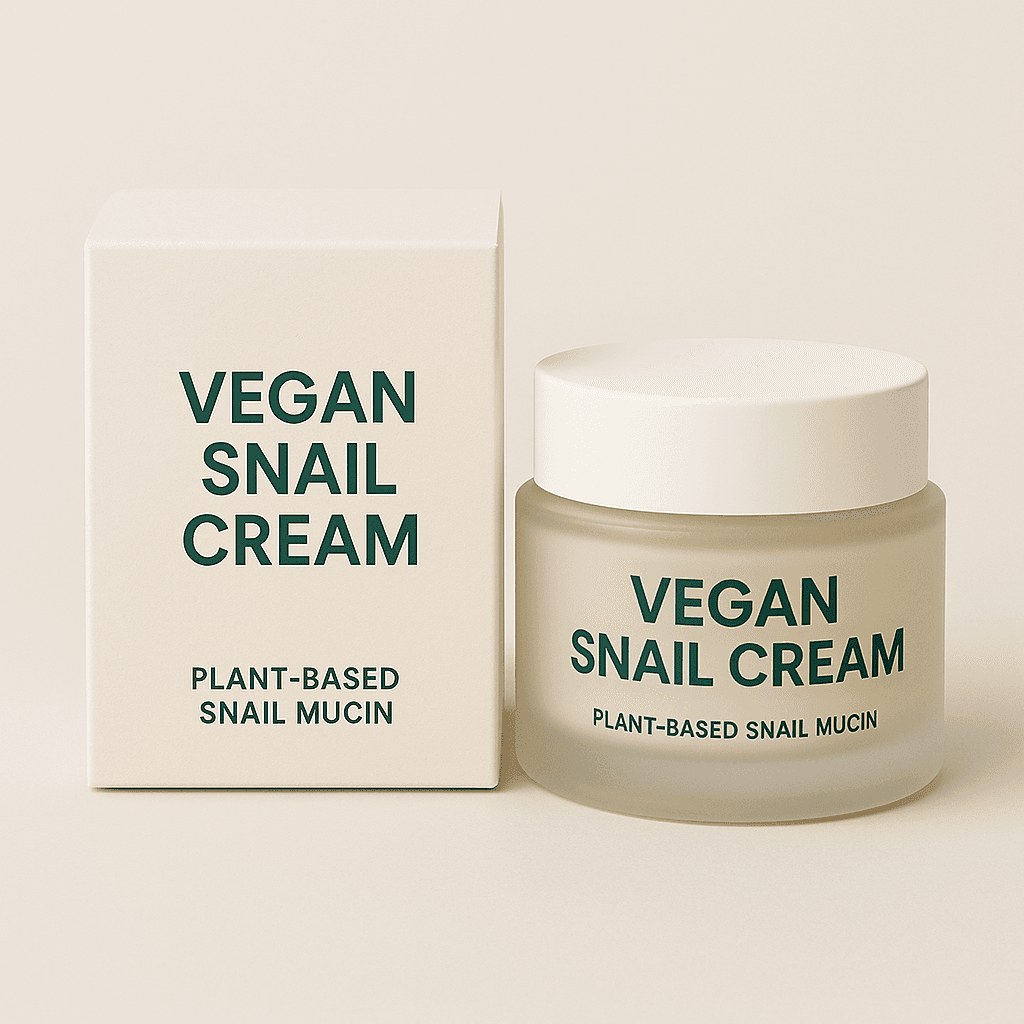
NO SNAIL CREAM, REAL VEGAN ALT.
A truly vegan alternative to snail mucin: this cream swaps animal-derived mucin for Korean wild yam phyto mucin, offering a genuine plant-based route to repair and glow.
Private label this product
MOQ, unit pricing and customization options are shared during the inquiry process — typically within one business day.
Request a quoteProduct description
Meet the real vegan answer to snail cream. Instead of snail mucin, this formula uses phyto mucin from Korean wild yam, combined with CICA, retinol, hyaluronic acid, and glycolic acid, to deliver the repairing, plumping care mucin creams are loved for — with a genuinely plant-based formula your customers can feel good about.
Key benefits
- Hydrating and moisturizing; improves plumpness
- Anti-aging care that helps prevent premature aging
- Supports skin repair and regeneration
- Promotes collagen and rejuvenation
- Anti-acne, anti-inflammatory, and anti-bacterial action
- Brightens and fades dark spots
- Free-radical protection and help against hyperpigmentation
Key ingredients
- Wild Yam from Korea (Phyto Mucin)
- Cica (Centella Asiatica) from Korea
- Retinol
- Hyaluronic Acid
- Glycolic Acid
Format & packaging
- Real vegan formula
- Packaging: jar/container, packed 1 per box in FSC paper
- Quantity: 50 ml in a 1-unit package
- Volume: 50 ml
FAQ
Does this cream contain any snail mucin?
No. It is a real vegan alternative — the mucin-like texture and care come from phyto mucin derived from Korean wild yam, not from snails.
Can my brand get Vegan certification for this product?
Yes, we offer certification support for Vegan claims on request, along with CPNP, SFDA, and Halal.
How many units is the minimum order?
MOQ starts at 3,000 units.
Can I change the jar or tweak the formula?
Packaging is fully customizable — jar, tube, or pump, including eco-friendly options — and the formula is partially customizable to fit your brand.
Is it compliant for the European market?
Yes. The product is EU-ready with CPNP registration and complete testing: microbiological, physical, chemical, challenge (PET), stability, and compatibility.